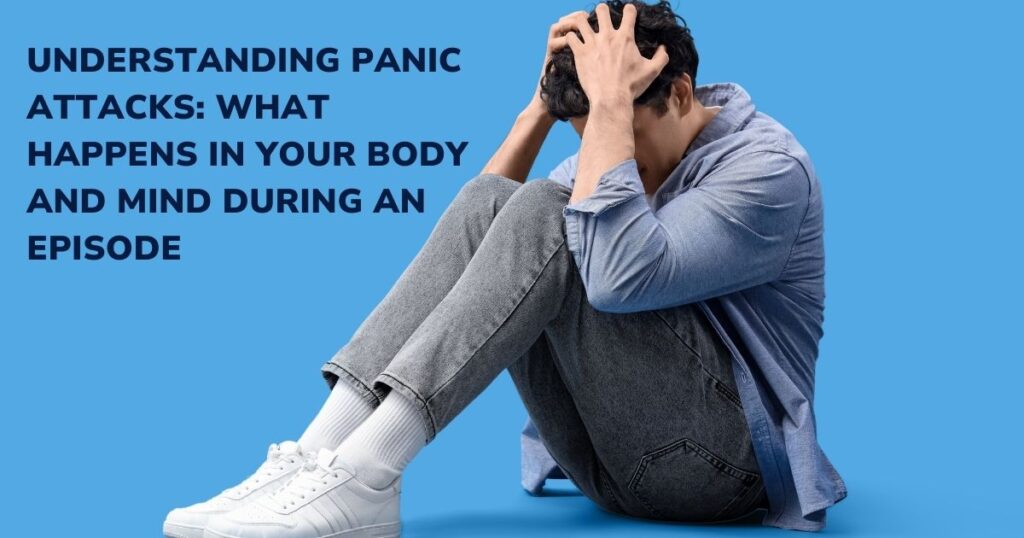
One moment you’re sitting in your car, stuck in Hyderabad traffic near Mehdipatnam, thinking about your workday. The next moment, your heart is racing so fast you can feel it pounding in your ears. Your chest tightens. You can’t seem to catch your breath. A wave of dizziness washes over you, and a terrifying thought flashes through your mind: “Something is terribly wrong. I need to get out of here. Now.”
If you’ve ever experienced a panic attack, you know how frightening and confusing it can be. But here’s what many people don’t realize: a panic attack is not a sign that something is dangerously wrong with you. It’s actually your body’s normal survival system—designed to protect you—misfiring in a situation where there’s no real danger.
At Shifa Psychiatry Care, located at 9-4-62/3/2, Meraj Colony, Gate 3, Tolichowki, Hyderabad, Dr. Imran Syed helps individuals understand exactly what happens during a panic attack so they can stop fearing the experience and start reclaiming control. With both in-person and online consultation available, expert guidance is accessible to residents across Gachibowli, Mehdipatnam, and surrounding Hyderabad areas.
Part I: The Body’s Alarm System – Designed to Protect You
To understand what happens during a panic attack, you first need to understand your body’s built-in alarm system: the fight-or-flight response.
Your Ancient Survival System
Thousands of years ago, humans faced very real physical dangers—predators, enemy tribes, natural disasters. The body developed an elegant survival system:
- The brain detects a threat
- It instantly activates the sympathetic nervous system
- Stress hormones flood the body
- You’re now ready to fight or flee for your life
This system worked perfectly for our ancestors. When they saw a tiger, they needed every resource available to survive.
The Problem: False Alarms
Here’s the challenge in modern life: your body can’t tell the difference between a real tiger and a perceived threat.
A stressful work meeting, a difficult conversation, traffic congestion in Gachibowli—even a thought about something anxiety-provoking—can trigger the same physical response. Your body prepares to fight or flee, but there’s no tiger. There’s no actual danger.
This mismatch is what happens during a panic attack. Your body activates its survival system, but because there’s nothing to fight or flee from, the energy has nowhere to go. The result? All those intense physical sensations without an outlet.
Part II: What Happens in Your Body During a Panic Attack – Minute by Minute
Let’s walk through exactly what happens during a panic attack, from the moment it begins to when it subsides.
The First 30 Seconds: The Trigger
Something happens—a physical sensation, a thought, an external trigger—and your brain’s alarm center (the amygdala) perceives a threat. Within milliseconds, it sends an urgent signal to your hypothalamus, which activates your autonomic nervous system.
Seconds 30-60: The Hormonal Flood
Your adrenal glands release a surge of adrenaline (epinephrine) and noradrenaline. This is the chemical trigger for everything that follows.
Minutes 1-2: Full System Activation
Now the physical symptoms cascade:
| Body System | What Happens | Why It Happens |
|---|---|---|
| Heart | Heart rate skyrockets (often 120-200 bpm) | To pump oxygen-rich blood to muscles for fighting or fleeing |
| Breathing | Rapid, shallow breathing (hyperventilation) | To maximize oxygen intake |
| Blood vessels | Blood vessels constrict in some areas, dilate in others | Directs blood to large muscles, away from extremities |
| Muscles | Tense and prepare for action | Ready for sudden movement |
| Sweat glands | Activate | To cool the body for sustained physical effort |
| Digestive system | Shuts down | Energy diverted to more “essential” functions |
| Pupils | Dilate | To let in more light and improve visual awareness |
Minutes 2-5: Peak Intensity
This is when the experience feels most overwhelming. All systems are firing at maximum. The physical sensations are intense—and because there’s no tiger, they feel inexplicable and terrifying.
Minutes 5-20: Gradual Decline
As adrenaline is metabolized, your parasympathetic nervous system (the “rest and digest” system) begins reasserting control. Heart rate gradually slows. Breathing deepens. Muscles begin relaxing.
After the Attack: The Aftermath
Once the acute episode passes, you’re often left feeling:
- Exhausted (your body just went through an enormous metabolic event)
- Shaken and confused (wondering what just happened)
- Embarrassed or ashamed (especially if it occurred in public)
- Fearful (worrying about when it might happen again)
Part III: The Physical Sensations Explained
Many people experiencing a panic attack for the first time believe they’re having a medical emergency—a heart attack, a stroke, or some catastrophic event. Understanding the reason behind each sensation can reduce fear.
Racing Heart: “Am I Having a Heart Attack?”
What you feel: Your heart pounds, races, or seems to skip beats. You might feel chest pressure or discomfort.
What’s actually happening: Adrenaline has stimulated your heart to beat faster and stronger. This is exactly what should happen when your body prepares for action. The sensation is intense but, for a healthy heart, not dangerous.
Important: If you’re uncertain whether symptoms are panic or a heart condition, seek medical evaluation. Once cleared, this knowledge can help you interpret future episodes correctly.
Shortness of Breath: “I Can’t Breathe – I’m Suffocating”
What you feel: You can’t seem to get enough air. You might gasp, pant, or feel like you’re choking.
What’s actually happening: You’re actually breathing too much (hyperventilating). Rapid breathing expels too much carbon dioxide, which changes your blood chemistry and creates the sensation of air hunger. You are getting enough oxygen—your blood oxygen levels remain normal.
Dizziness and Lightheadedness: “I’m Going to Faint”
What you feel: The room spins. You feel unsteady, like you might collapse.
What’s actually happening: The combination of rapid breathing (changing blood chemistry) and blood being redirected to large muscles can create temporary dizziness. Interestingly, fainting during a panic attack is extremely rare because your blood pressure is elevated, not lowered.
Numbness and Tingling: “Something Is Wrong With My Nerves”
What you feel: Pins and needles in your hands, feet, or around your mouth.
What’s actually happening: This is a direct result of hyperventilation. Rapid breathing alters your blood’s carbon dioxide levels, which temporarily affects nerve function and produces these sensations. They’re harmless and will resolve as breathing normalizes.
Chest Tightness: “My Chest Is Being Squeezed”
What you feel: Pressure, tightness, or discomfort in the chest area.
What’s actually happening: Chest muscles are tensing as part of the fight-or-flight response. Additionally, rapid breathing can create muscle fatigue in the chest wall. This is muscle tension, not heart damage.
Sweating and Chills: “Why Am I Drenched?”
What you feel: Profuse sweating or waves of heat and cold.
What’s actually happening: Your body is activating its cooling system in preparation for physical exertion. Blood vessels near the skin surface alternately constrict and dilate, creating temperature fluctuations.
Trembling: “I Can’t Stop Shaking”
What you feel: Visible shaking or internal trembling.
What’s actually happening: Muscles are receiving repeated signals to contract, preparing for action. The trembling is the physical manifestation of your nervous system being “revved up.”
Part IV: What Happens in Your Mind During a Panic Attack
The physical experience is only half the story. The cognitive experience—what happens in your mind—is equally important to understanding what happens during a panic attack.
The Thought Cascade
Stage 1: Initial Sensation
You notice something physical: “My heart is beating faster.”
Stage 2: Threat Interpretation
Your brain, already on high alert, interprets this sensation as dangerous: “Why is my heart racing? Something is wrong!”
Stage 3: Catastrophic Thinking
The thought spirals: “This is getting worse. I might be having a heart attack. I might die. I need to get out of here.”
Stage 4: Fear Feeds Fear
These terrifying thoughts trigger more adrenaline release, which intensifies physical symptoms, which confirms your fear that something is terribly wrong.
Stage 5: Urgency to Escape
A powerful drive to escape the situation emerges: “I have to get out. I have to make this stop.”
Common Catastrophic Thoughts
During panic attacks, people often think:
- “I’m having a heart attack.”
- “I’m going to pass out.”
- “I’m losing my mind.”
- “I’m going to do something uncontrollable.”
- “I’m dying.”
- “Everyone can see something is wrong with me.”
The Role of Interoceptive Awareness
Interoceptive awareness is your ability to notice internal body sensations. During panic disorder, this awareness becomes heightened and biased toward threat. You notice sensations others might ignore—and you interpret them as dangerous.
Part V: The Panic Attack Timeline – What to Expect
Understanding the typical timeline of a panic attack can help you ride out the experience rather than fighting it.
| Time Frame | What’s Happening | What to Know |
|---|---|---|
| First 1-2 minutes | Symptoms appear and rapidly intensify | This is the most frightening phase, but it’s also the shortest |
| Minutes 3-5 | Symptoms peak | The intensity won’t increase further—you’re at the peak |
| Minutes 5-10 | Symptoms begin plateauing | Your body is metabolizing adrenaline; the worst is passing |
| Minutes 10-20 | Gradual decline | Symptoms slowly subside as your nervous system calms |
| After 20 minutes | Significant improvement | Most acute symptoms have resolved, though fatigue remains |
Important note: Panic attacks rarely last longer than 20-30 minutes. If symptoms persist for hours, you may be experiencing a state of high anxiety, but not a continuous panic attack.
Part VI: Why Understanding What Happens During a Panic Attack Matters
Knowledge isn’t just power—it’s treatment.
Breaking the Fear Cycle
When you understand what happens during a panic attack, you can:
- Recognize symptoms as normal body responses, not dangerous events
- Stop adding fear to fear, which intensifies the experience
- Ride out the wave knowing it will pass
- Reduce avoidance behavior because situations feel less threatening
The Paradox of Panic
Here’s the paradox that changes everything: The more you fear panic, the more likely it is to occur. The less you fear it, the less power it has.
Understanding the mechanics of panic reduces fear. Reduced fear means less adrenaline release. Less adrenaline means fewer physical symptoms. Fewer physical symptoms means less to misinterpret.
This is why psychoeducation—simply learning about panic—is often the first and most important step in treatment.
Part VII: What Panic Attacks Are NOT
Understanding what happens during a panic attack also means understanding what panic attacks aren’t.
| Common Fear | Reality |
|---|---|
| “I’m having a heart attack” | Heart attack pain is typically constant; panic chest discomfort varies with anxiety level. Heart attacks often involve exertion; panic can occur at rest. |
| “I’m going to faint” | Fainting requires a drop in blood pressure; panic elevates blood pressure. True fainting during panic is extremely rare. |
| “I’m losing my mind” | Panic attacks are intense but temporary. They do not cause psychosis or “losing touch with reality.” |
| “I’m going to lose control” | The urge to escape is powerful, but acting completely out of control is not characteristic of panic. Most people maintain behavioral control. |
| “This will never end” | Panic attacks always end. They are self-limiting events. |
Part VIII: What to Do During a Panic Attack – Practical Strategies
Knowing what happens during a panic attack helps you respond effectively.
The Counterintuitive Approach: Don’t Fight
Most people’s instinct is to fight panic—to try to make it stop. Unfortunately, fighting panic is like fighting quicksand: the more you struggle, the deeper you sink.
The alternative: Accept and allow.
Step-by-Step Response
1. Acknowledge What’s Happening
Say to yourself: “This is a panic attack. It’s my body’s alarm system misfiring. It’s uncomfortable but not dangerous.”
2. Breathe Slowly
Belly breathing (diaphragmatic breathing) helps reverse hyperventilation:
- Inhale slowly through nose (4 counts)
- Pause briefly (optional)
- Exhale slowly through mouth (6 counts)
- Repeat
3. Ride the Wave
Visualize the panic as a wave—it builds, peaks, and then naturally subsides. You don’t need to stop it; you just need to ride it out.
4. Use Grounding
Anchor yourself in the present:
- Feel your feet firmly on the floor
- Notice the temperature of the air on your skin
- Look around and name 3 things you can see
5. Continue What You Were Doing
If possible, stay where you are and continue your activity. Leaving reinforces the belief that the situation was dangerous.
Part IX: When to Seek Professional Help
Understanding what happens during a panic attack is valuable, but professional help may be needed if:
✅ Panic attacks occur repeatedly
✅ You live in fear of having another attack
✅ You’re avoiding situations because of panic
✅ Panic interferes with work, relationships, or daily life
✅ Self-help strategies aren’t providing sufficient relief
Treatment Options at Shifa Psychiatry Care
At Shifa Psychiatry Care in Tolichowki, Hyderabad, Dr. Imran Syed offers comprehensive treatment including:
- Cognitive Behavioral Therapy (CBT): The gold-standard treatment for panic disorder
- Psychoeducation: Helping you fully understand your panic patterns
- Coping skill development: Practical tools for managing attacks
- Medication management: When appropriate, as part of a comprehensive plan
- Relapse prevention: Long-term strategies for maintained wellness
Accessible Care Options
📍 In-person consultations: 9-4-62/3/2, Meraj Colony, Gate 3, Tolichowki, Hyderabad
⏰ Evening hours: 8:00 PM to 10:00 PM (designed for working professionals)
💻 Online consultation available: Secure virtual sessions from home
📞 Contact: +91 86392 09712
📧 Email: Dr.imranpsychiatrist2@gmail.com
📱 Follow: @drimransyed
Part X: Frequently Asked Questions
Can a panic attack happen while sleeping?
Yes—nocturnal panic attacks occur when you wake from sleep in a state of panic. The same mechanisms apply, and they respond to the same treatments.
Are panic attacks dangerous for my heart?
For a healthy heart, panic attacks are not dangerous. The sensation is intense, but the heart is designed to handle these temporary increases in rate and force.
Why do panic attacks seem to come out of nowhere?
Sometimes triggers are subtle—a slight change in heart rate, a brief dizzy moment—and you may not consciously notice them. Your body responds before your conscious mind registers the trigger.
Can children have panic attacks?
Yes, though they may describe symptoms differently. If your child experiences sudden, intense fear with physical symptoms, professional evaluation is recommended.
Will I ever be free from panic attacks?
Most people with panic disorder achieve significant improvement or complete recovery with appropriate treatment. You can learn to manage panic so it no longer controls your life.
Your Journey to Understanding and Recovery
Understanding what happens during a panic attack demystifies the experience and reduces its power. Your body’s alarm system, while frightening when it misfires, is fundamentally designed to protect you—not harm you.
With proper understanding and support, you can learn to respond to panic differently. You can break the cycle of fear and reclaim your life.
Dr. Imran Syed and the team at Shifa Psychiatry Care are here to support you on that journey.
📞 Call Today: +91 86392 09712
📧 Email: Dr.imranpsychiatrist2@gmail.com
📍 Visit Us: 9-4-62/3/2, Meraj Colony, Gate 3, Tolichowki, Hyderabad – 500008
⏰ Consultation Hours: 8:00 PM to 10:00 PM
💻 Online Consultation Available
📱 Follow for Mental Health Insights: @dr.imransyed
Serving Hyderabad residents in:
- Tolichowki
- Mehdipatnam
- Gachibowli
- Banjara Hills
- Jubilee Hills
- HITEC City
- And surrounding areas
Disclaimer: This content is for informational purposes only and does not constitute medical advice. Always consult a qualified mental health professional for diagnosis and treatment tailored to your specific situation.